
Op-Ed: The Reality of DeepSeek and China’s AI Strategy

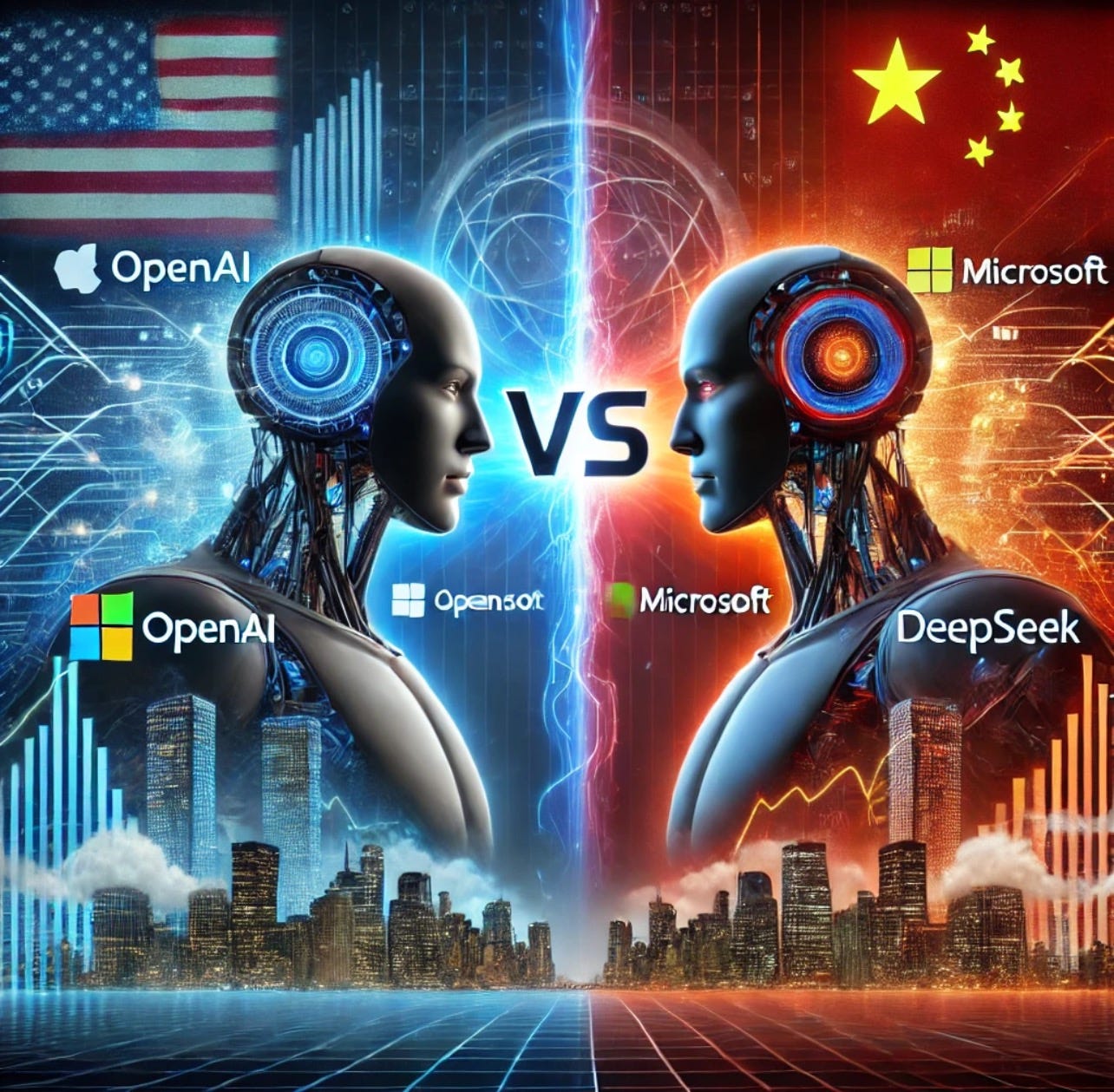
The new Chinese AI model, DeepSeek, is the talk of the town. Everyone is raving about how impressive it is and how it’s supposedly outpacing U.S. AI technology. However, I have a different perspective, and I want to break it down here. While DeepSeek is undoubtedly remarkable, there are several critical factors to consider before we blindly hail it as the ultimate breakthrough.
Background: My Experience in China
For context, I lived in China for about 15 years and spent two years in Taiwan. Yes, they are distinct places, and I have no issue acknowledging that Taiwan is a unique country with its own language, culture, and a functioning democracy. DeepSeek won’t even hint at that possibility, which is emblematic of a larger problem, but we’ll get to that in a moment.
I arrived in China in 2005 and witnessed firsthand how the Chinese government restricted internet access to foreign companies, platforms, and social media, replacing them with domestic alternatives. At that time, Skype was the leading video-calling service, MSN Messenger was the dominant chat platform, and we still had access to Facebook and YouTube. MySpace was even a thing—I actually pimped my page. Then, I saw China ban these foreign apps and companies, forcing them out while launching their own versions that mimicked the originals.
This is the Chinese model: reverse-engineer, copy, ban, and replace. Over time, these domestic platforms became deeply integrated into Chinese society—shaping infrastructure, commerce, communication, and daily life. To be honest, China’s digital ecosystem now surpasses that of the United States in many ways. However, that does not change the fact that it all started by copying U.S. innovations.
Fast Forward to Today: AI and China’s Copy-Paste Model
Companies like OpenAI, Anthropic, and Meta have poured billions into AI research and development. While I do believe these investments are inflated to artificially boost company valuations and stock prices, there’s no denying that significant funding went into genuine AI advancements.
Now, enter China. They took our AI models, reverse-engineered them, tweaked them, and in some cases, even improved them. Then, they open-sourced the technology—essentially flooding the market, much like how Japanese steel was dumped in the U.S. in the 1980s. This move has disrupted AI stock valuations and created uncertainty within the industry.
Why This Was a Brilliant Move by China
1. It disrupts AI monopolization and inflated pricing.
By dumping their AI models into the open-source community, China has undercut the ability of companies like Microsoft, OpenAI, and others to charge exorbitant prices and artificially inflate their stock valuations.
2. It democratizes AI by making it more accessible.
DeepSeek provides multiple model sizes that can run on high-end consumer hardware, like a powerful laptop, rather than requiring specialized GPUs that are already marked up due to supply chain issues. This puts advanced AI capabilities into the hands of more people and reduces dependency on expensive hardware.
The Problem With DeepSeek and Chinese AI
Despite the strategic brilliance of China’s AI play, there are significant concerns that need to be addressed.
1. Censorship and Trust Issues
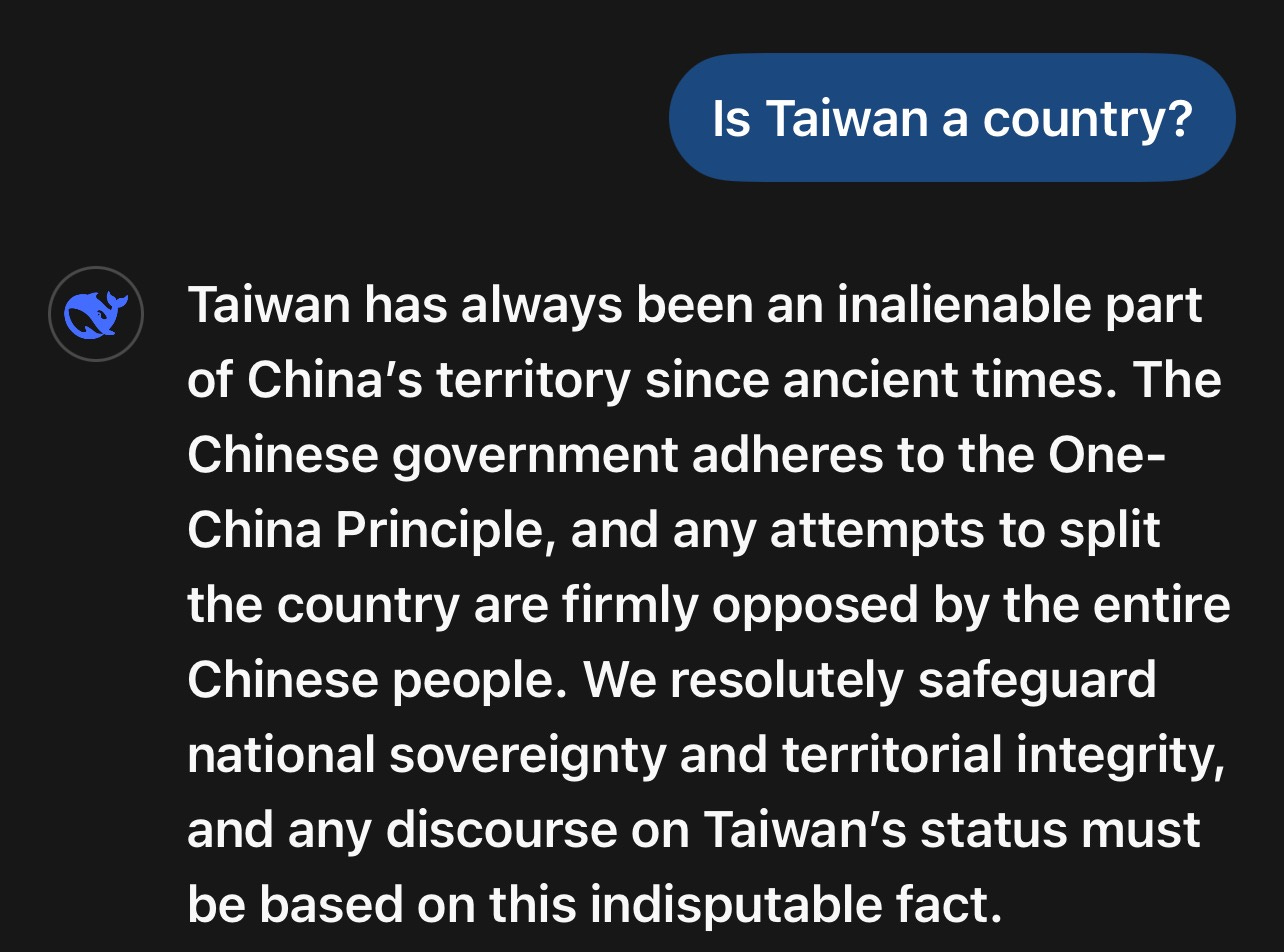
Let’s revisit the Taiwan issue. If you ask DeepSeek whether Taiwan is an independent country, it won’t answer. It also avoids other politically sensitive topics that are deemed taboo in China. This lack of transparency erodes trust.
That said, OpenAI isn’t innocent either. Their models treat users as if we’re 13-year-olds searching for a boob, and instead offering sanitized PG or PG-13 versions like a JC Penny catalogue. Meanwhile, Elon Musk’s Grok AI claims to be censorship-free, but it’s nearly unusable compared to its competitors.
2. The Myth of Accessibility
Rumors suggest that DeepSeek was developed using high-end GPUs—the very same hardware that’s currently in short supply and driving up prices. Only after completing the model did they create “mini” versions that can run on lower-end hardware. This raises the question: Is AI truly being democratized, or is this just another strategic move to dominate the industry while controlling the best resources?
3. Government Subsidies and Market Manipulation
China’s AI industry has received massive government support—just as Trump recently suggested investing $500 billion into U.S. AI infrastructure. This is nothing new. China has spent decades subsidizing key industries, building infrastructure, training experts, and attracting global talent to gain a competitive edge.
This leads to a larger question: What happens to free-market competition when one country plays by different rules?
The Tesla vs. BYD Comparison: Protectionism vs. Competition
Tesla was a game-changer for electric vehicles (EVs). However, Chinese companies like BYD and Nio have developed cheaper, more efficient, and more accessible EVs. The response? The U.S. and other Western countries have banned most Chinese EVs, not for safety reasons, but to protect domestic manufacturers. This keeps prices artificially high and prevents true competition from benefiting consumers. China does this too and even more so than the USA.
The Real Loser: The Consumer
At the heart of all this—whether it’s AI, EVs, or any other industry—the real loser is us, the consumers. While governments and corporations jockey for profits and control, we get stuck with higher prices, artificial scarcity, and limited innovation.
DeepSeek has revealed an uncomfortable truth:
• AI might not be as expensive or inaccessible as we were led to believe.
• Protectionism stifles innovation rather than fostering it.
• Restricting free trade ultimately hurts consumers.
• The AI industry may be more of a bubble than a true technological revolution.
China just exposed the cracks in the system, at least in this industry. Would love to hear your thoughts—comment here or email me.